身在中國與美國的女主播,隔空就兩國貿易戰展開辯論,連中國外交部及國防部都表示關注,不過戰況比外界想象溫和,有網民形容像兩主播一問一答式訪談,有人則認為內容沉悶。
兩名女主播分別為中國環球電視網的劉欣與美國霍士的里根,兩人早前在各自的電視節目上,就中美貿易戰隔空舌戰。劉欣批評里根鼓吹經濟戰爭,里根亦在節目反擊「中國發起一場針對美國的全面訊息戰,最新目標是我本人」。她隨後在社交網絡挑戰劉欣,要求舉行一場有關貿易的誠實辯論,劉欣接受邀請,中國外交部發言人陸慷也表示跟大家一樣關心辯論,但最終因版權問題,中國環球電視網無法直播。
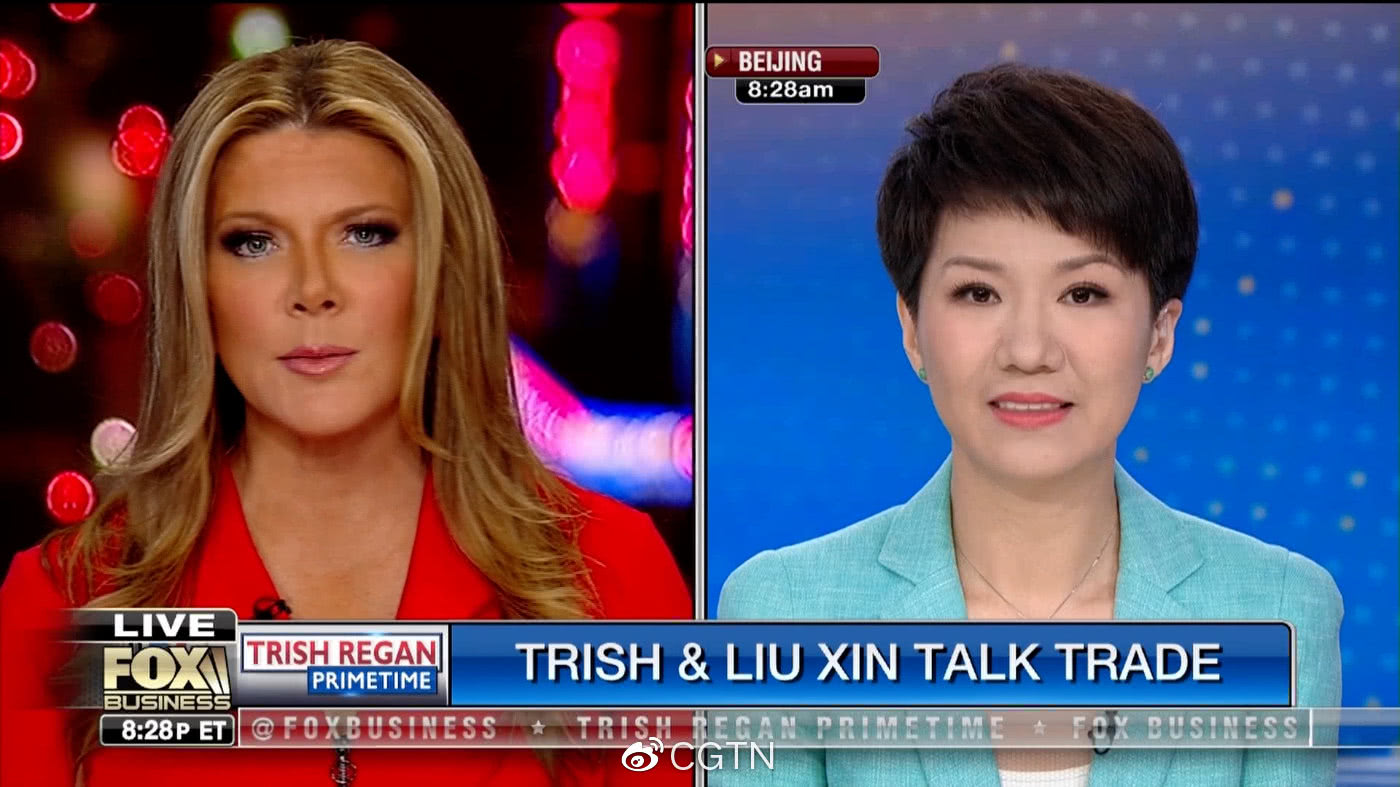
以下為兩人辯論的全文摘錄:
中文版:
里根:今天晚上我有一位特別的嘉賓,她是來自於中國北京,跟我們聊一聊美國和她的國家中國之間的貿易挑戰。
她是中國一檔黃金時段英語電視節目的主持人,該節目由中國共產黨監督。我知道我們不可能在所有問題上持相同意見,但我認為這是一個非常好的機會,讓我們能夠聽到非常不一樣的聲音。
目前貿易談判陷入僵局,所以能夠有機會了解中國共產黨對貿易的看法和對美國的看法,將是非常有意義的。為了透明起見,我要解釋一下,我不代表任何人,我只代表我自己,我的身份是福克斯電視臺的節目主持人。我們這期節目的嘉賓則是中國共產黨的一員,但是沒關係。如我之前所說,我歡迎不同的觀點、不同的視角。
那我們歡迎劉欣,她是黃金時段節目主持人,《欣視點》節目的主持人來到《里根黃金檔》節目。由於中國和美國衛星信號連接有一些延遲,所以希望我們不會出現聲音重疊或把對方的聲音蓋住。劉欣,歡迎你,非常高興你來到我的節目。
劉欣:謝謝你,翠西,非常感謝邀請我來到你的節目。今天是一個前所未有的機會,我之前從未想過能有這樣的機會跟你直接進行溝通,跟美國的廣大觀眾進行交流。
我必須說明一下,我還不是中國共產黨黨員,這點是有檔案可查的,請不要先入為主地認為我是一個黨員。我不代表中國共產黨的立場,我只代表我個人,劉欣,是CGTN的主播。
里根:你覺得中美貿易談判現在處在一個什麼階段?你是否相信我們會達成一個協議?
劉欣:我沒有什麼內幕消息,只知道上一輪談判不是很順利,當時是在美國談的。現在雙方都在考慮未來前進的方向。
中國政府已經把立場說得很清楚了,只要美方用公正的態度對待中國政府和中方的談判團隊,拿出談判的誠意,不施加外部壓力,還是很有希望達成一個好的結果的;否則雙方都會面臨一個長期的僵局。
里根:我想強調的是,貿易戰從來都不是好事,對誰都沒有任何好處。所以我願意相信我們是會達成一些成果的(劉欣:同意)。這無疑是一個充滿挑戰的時代,我也看到有很多的言論。那讓我來提問一個其中最主要的問題,就是智慧財產權問題。從根本上說,我們都認為,如果不是你的東西,你拿走是不對的。但是我們看到有很多這樣的案例,比如像WTO這樣獨立的國際組織,中國也是WTO的成員,還有美國司法部和聯邦調查局,都公佈過此類案例,你現在可以從我們螢幕上面看到列出了其中一些這樣的案例。這些都是證據,顯示中國竊取了美國大量的智慧財產權,價值數千億美元。數額巨大。
但我們應該真正關心的不是上億還是說幾毛錢,而是:如果在中國做生意的美國企業面臨著它們的智慧財產權、創意、辛勤勞動的成果被竊取的風險,它們還如何在中國做生意?
劉欣:你得問美國的企業了,它們想不想來中國,它們在中國做生意、與中國企業合作是否有利可圖,美國企業會告訴你他們的答案。據我所知,大部分在中國做生意的美國企業的利潤都是非常豐厚的,絕大部分決定繼續在中國投資,不斷開拓中國市場。但是美國總統特朗普的關稅政策使這種計畫變得困難,也讓未來變得更加不確定。
我不否認有侵犯智慧財產權的情況,有版權問題、盜版問題甚至商業機密被竊取的問題。我認為這是必須要處理的問題,而中國政府、中國人民,包括我自己作為一個個體,都有一個共識,就是:沒有智慧財產權的保護,任何一個國家、任何一個人,都無法發展壯大。所以說這個是我們全社會的一個共識。
當然,是有一些個人或者公司去竊取的情況,這個我覺得也不僅僅在中國,在全世界都很普遍,美國公司也有這樣的情況,因為智慧財產權侵權而打官司。你不能僅僅因為這些案例就說美國在盜竊,或者中國、中國人民在盜竊。這也是我為什麼之前做出那樣的回應,因為這樣籠統的指責無益於問題的解決。
里根:這不是我的說辭,而是有很多相關報告的,包括WTO也有這樣的證據。我們現在來談談華為的問題,這是一個熱點話題。
我們其實都會同意,如果我們想跟別人做生意,必須基於互信。你不希望在做生意的時候,別人把你研究了幾十年的很有價值的東西偷走。中國從2017年開始授權科技企業與軍方和政府合作(譯注:里根應是指中央軍民融合發展委員會成立於2017年1月22日),這就意味著不僅只是一個公司行為,而是政府行為,兩者之間是有稍許區別。但據我所知,華為不能進入美國市場,中國覺得不太高興,這我也可以理解。但我換種方式來問吧,這麼問或許更有趣,比如“華為,來我們美國市場吧。但我們先約法三章:你必須跟我們分享你們所取得的那些巨大的科技成就”,這種方式,你覺得可以嗎?
劉欣:如果通過合作的框架,互相學習,如果你支付了智慧財產權的費用,我覺得是可以的。為什麼不呢?我們互相學習才能共同進步。我自己也學英語,因為我有美國老師,我有美國的朋友,同時我做新聞,我的編輯、同事很多都是美國人。只要不是違法的事情,都是可以做的,大家都應該這麼做,才能夠不斷讓自己做得更好。
里根:你說的有一點非常重要,就是你要獲得這些(智慧財產權),你就得付費。我覺得我們生活在一個經濟自由化的世界,我們歷來都很重視智慧財產權的保護,並且智慧財產權是受到一整套法律保護的。如果我們想要達成對彼此的互信的話,我們都需要根據規則和法律行事。我現在換個話題吧,中國已經是世界第二大經濟體,你覺得什麼時候中國會停止稱自己為發展中國家,會不再向世界銀行借錢?
劉欣:我覺得這種討論,也在進行之中,我聽到了很多現場的討論,的確,有人說中國已經成為一個大國,為什麼不能像一個成人一樣長大。基本上你也在你的節目中,也說到,說中國要長大,我們的確也想要變的強大,我們不想要一直是一個弱小、貧窮、欠發達的國家,但這也要取決於你如何定義發展中國家,對嗎?如果你看中國整體的經濟體量,的確是體量非常大,但是你不要忘了,我們有14億人口,這個是美國的三倍之多。雖然中國是世界第二大經濟體,但是如果按人均GDP來算的話,大概是美國人均GDP的六分之一。與某些歐洲發達國家相比,甚至會更少。
那你告訴我,我們該如何定位自己呢?這是一個非常複雜的問題,因為像我所說的人均的數值很小的,但是總體的體量又很大,我們可以做一些大事,人們也寄希望於中國,在全球有更多的貢獻。我們的確也在這麼做,我們為聯合國做出了很多的貢獻,我們是聯合國(五個常任理事國中)維和行動最大的貢獻方,我們給了捐贈、給了人道主義援助等等。我知道我們要繼續壯大。翠西感謝你,你提醒的這一點非常好。
里根:那我們來談談關稅的問題,我也看了你之前的一些評論。劉欣,我也很感謝,你說中國可以降低一些關稅,我看到你說了這個話,我完全同意你這個觀點,2016年加徵在美國產品上的平均關稅,是9.9%,比美國加徵在中國身上的高三倍。你覺得這個關稅該怎麼解決?如果我建議說“要不咱們採取統一行動,統一降低關稅”,你覺得這可行嗎?
劉欣:我覺得這是一個很好的想法。你不覺得這對於美國消費者來說,他們可以享受更加實惠的中國產品?對於中國的消費者來說美國的產品也會變的實惠?這是我們共同努力的方向。你提到一個基於規則的一個系統,或者是一個基於規則的秩序,所以說,如果要改變規則的話,就必須雙方先達成共識。您談到關稅的問題,不光是中美之間的問題。如果你降低中美之間的關稅,那歐洲會來、日本也會來、委內瑞拉也會來,同樣要求降低關稅,你不能區別對待,所以要達成這個協定,是非常複雜的。對,我是說關於貿易的問題,關於關稅,我認為上一次全球達成關於降低關稅的意見,中方也做出承諾,這就是多邊主義和長期艱難談判的結果。美國看到自己的利益,決定他們要降低到什麼程度,降低多少,沒人拿搶指著他們的腦袋。中國雖然遇到了一些困難,那我們也大幅降低了我們的關稅,這都是各國基於自身利益做出的決定。現在大環境變了,我同意,20年過去了,我們現在要怎麼做,有一些規則是需要改變的。你知道嗎?那我們就聊聊這些規則,我們可以按照相同的規則行事,如果你不喜歡一些規則,那我們就改變它,但是我說的是這必須是多方達成的共同決定。
里根:那我們回到1974年《貿易法》301條款,《貿易法》301條款中,有規則授權美國可以用關稅去限制中國的行為,如果中國拿走或竊取智慧財產權的話。某種程度來說,這是事情的本源,是關於信任的問題。你談到強迫技術轉讓,一些美國公司也許做了錯誤的決定,願意按照中國的要求,放棄一些東西。這個問題要從國家的角度介入。我們看到美國已經做出一些舉措,並且是以一種前所未有的方式在做。現在實情就是如此,請不要誤解為我的個人想法。我想說之前的政府看到了這樣一些挑戰,但是他們沒有想要解決的意願,目前來講時代變了。你怎麼定義國家資本主義?
劉欣:我沒有聽清,您能再說一遍嗎?想要定義什麼?我聽到你說強迫技術轉讓。
里根:不,國家資本主義。之前是談到過強迫技術轉讓,但現在說的是國家資本主義。
劉欣:你之前談強迫技術轉讓,怎麼突然跳到了別的主題?
里根:等一下劉欣,你讓我說完,你們的經濟體系,是挺有意思的,你們有一個資本主義的體系,但是受國家控制的。跟我們聊一聊這方面,你是如何定義的?
劉欣:我們定義是中國特色社會主義市場經濟,市場力量依然是占主導力量,它在資源配置上,起決定性作用。它本身是市場經濟,但是會有中國特色。比如說有一些國有企業,在經濟中,起到非常重要的,但是相對越來越小的作用。大家都會覺得中國的經濟,所有都是國家控制,所有都是國家、國家、國家,但事實卻並不是如此,你如果看一下數字,80%中國僱員都是受僱民營企業的,也有80%的出口來自民營企業。65%的創新是源於民營企業。很多對人們日常生活影響巨大的公司,比如說一些網路公司、5G公司,都是私營企業。我們的確是中國特色社會主義市場經濟,但不是所有的東西都是由國家控制,我們其實是一個非常混合、非常活躍、非常開放的經濟體。
里根:我覺得你們可能希望能夠繼續這樣開放,因為我個人是自由貿易支持者,我認為這是正確的方向。最終我們希望中國更繁榮,美國也更繁榮,這樣的話我們才能雙贏。我覺得我們的對話很有趣,非常感謝你。
劉欣:謝謝,非常感謝!如果未來還想討論的話,我們也可以繼續。
里根:我是非常希望的。
劉欣:願意來中國的話,我們也非常歡迎,感謝!
里根:非常感謝。
英文版:
Trish Regan: Tonight, I have a special guest joining me all the way from Beijing, China to discuss the challenges of trade between the US and her home country.
She’s the host of a primetime English language television programme overseen by the CCP, the Chinese Communist Party. And though she and I may not agree on everything, I believe this is actually a really unique opportunity, an opportunity to hear a very different view.
As these trade negotiations stall out, it’s helpful to know how the Chinese communist party is thinking about trade and about the United States. In the interests of transparency, I should explain that I don’t speak for anyone but myself as the host of a Fox Business show. My guest however is part of the CCP and that’s fine. As I said, I welcome different perspectives on this show.
I’m very pleased tonight to welcome Ms. Liu Xin, host of the primetime opinion programme The Point with Liu Xin, to Trish Regan Primetime, tonight. To the viewers, please bear with us, as we have a significant time delay in our satellites between Beijing and the US and because of that we’re going to do our very best not to speak over each other but Xin, welcome, it’s good to have you here.
Liu Xin: Thank you Trish, thank you for having me, it’s a great opportunity for me, unprecedented, I never dreamed that I would have this kind of opportunity to speak to you and to speak to many audiences in ordinary households in the United States.
I have to get it straight, I am not a member of the Communist Party of China (CPC), this is on the record. So please don’t assume that I’m a member, and I don’t speak for the Communist Party of China, here today I’m only speaking for myself, as Liu Xin, a journalist working for CGTN.
Trish Regan: What is your current assessment of where the trade talks actually are? Do you believe a deal is possible?
Liu Xin: I don’t have any insider information. What I know is the talks were not very successful last time, they were going on in the United States and now I think both sides are considering where to go next.
But I think the Chinese government has made its position very clear, that unless the United States treat the Chinese government, treat the Chinese negotiating team with respect and show the willingness to talk without using outside pressure, there is high possibility that there could be a productive trade deal. Otherwise we might be facing a prolonged period of problems for both sides.
Trish Regan: I would stress that trade wars are never good. They’re not good for anyone. So I want to believe that something can get done (LX: Agreed). These are certainly challenging times, I realise there’s a lot of rhetoric out there. But let me turn to one of the biggest issues and that’s intellectual property rights. Fundamentally, I think we can all agree it’s never right to take something that’s not yours. And yet in going through so many of these cases, cases that the independent World Trade Organisation, the WTO, that China is a member of, as well as the DOJ and FBI cases – you can actually see some of them on the screen right now – there’s evidence there that China has stolen enormous amounts of intellectual property. Hundreds of billions of dollars’ worth. That’s a lot of money.
But I guess we shouldn’t really care if it’s hundreds of billions of dollars or just 50 cents. How do American businesses operate in China if they’re at risk for having their property, their ideas, their hard work stolen?
Liu Xin: You have to ask American businesses whether they wanted to come to China, whether they find coming to China and cooperating with Chinese businesses (has not been) profitable or not, and they will tell you their answers. As far as I understand many American companies have been established in China, they’re very profitable and the great majority of them I believe plan to continue to invest in China and explore the Chinese market. U.S. President Donald Trump’s tariff makes it a little bit more difficult, makes the future a little uncertain.
I do not deny that there are IP infringements, there are copyright issues or there are piracy or even theft of commercial secrets. I think that is something that has to be dealt with, and I think the Chinese government, the Chinese people and me as an individual, I think there’s a consensus because without the protection of IP rights, nobody, no country, no individual can be stronger, can develop itself. I think that is a very clear consensus among Chinese society.
And of course there are cases where individuals, where companies go and steal, and I think that’s a common practice probably in every part of the world, and there are companies in the United States who sue each other all the time over infringement on IP rights. You can’t say, simply because these cases are happening, that America is stealing, or China is stealing, or the Chinese people are stealing. And basically that’s the reason why I wrote that rebuttal, because that kind of blanket statement is really not helpful, really not helpful.
Trish Regan: It’s not just a statement, it’s multiple reports, including evidence from the WTO. But let me ask you about Huawei because that’s certainly in the headlines now…
I think we can all agree that if you’re going to do business with someone, it has to be based on trust. You don’t want anyone stealing your valuable information that you’ve spent decades working on. Anyway, China passed a law in 2017 requiring tech companies to work with the military and the government, so it’s not just individual companies that might be getting access to this technology, it’s the government itself, which is an interesting nuance. But I get that China is upset that Huawei is not being welcomed into the US markets, I totally get it, so let me just ask you this. It’s an interesting way to think about it. What if we said, 『hey sure, Huawei, come on in, but here’s the deal, you must share all those incredible technological advances that you’ve been working on, you’ve got to share it with us』, would that be ok?
Liu Xin: I think if it is through cooperation, if it is through mutual learning, if you pay for the use of this IP or high technology, it’s absolutely fine, why not? We all prosper because we learn from each other, I learnt English because I had American teachers, I learnt English because I had American friends, I still learn how to do journalism because I have American copy editors or editors. I think that’s fine so long as it’s not illegal, I think everybody should do that and that’s how you get better.
Trish Regan: You mentioned something pretty important, which is that you should pay for the acquisition of that (IP). I think that the liberalized economic world in which we live has valued intellectual property and it’s governed by a set of laws. So we all need to play by the rules and play by those laws if we’re going to have that kind of trust between each other. But I think you bring up some good points. Let me turn to China right now which is, wow, the second largest economy. At what point will China decide to abandon its developing nation status and stop borrowing from the World Bank?
Liu Xin: Well I think this kind of discussion is going on, and I’ve heard very live discussions about this. And indeed there are people talking about China becoming so big, why don’t you just grow up? Basically I think you said it in your program as well, “China, grow up!” I think we want to grow up, we don’t want to be dwarfed or poor, underdeveloped all the time. But it depends on how you define developing country. If you look at China’s overall size, the overall size of the Chinese economy, yes, we are very big. But don’t forget we have 1.4 billion people, that is over three times the population of the United States. So if you divide the second largest overall economy in the world, basically when it comes down to per capita GDP we are less than one sixth of that of the United States, and even less than some other more developed countries in Europe.
So you tell me where we should put ourselves. This is a very complicated issue, because per capita as I said is very small, but overall it’s very big. So we can do a lot of big things, and people are looking upon us to do much more around the world. I think we are doing that, we are contributing to the United Nations. We are the world’s biggest contributor to the UN peacekeeping missions (among the five permanent members of the UN), we are giving out donations and humanitarian aid and all of that because we know we have to grow up. And Trish, thank you for that reminder.
Trish Regan: Let’s get to the tariffs. I’ve seen some of your commentaries too. And Xin, I appreciate that you think China could lower some of its tariffs. I watched you say that and I’m totally in agreement with you. In 2016, the average tariff, effectively a tax, that was charged on an American good in China was 9.9%. That was nearly three times what the US was charging. So what do you say about this, what do you think about saying 「hey, to heck with these tariffs, let’s get rid of them altogether.」 Would that work?
Liu Xin: I think that would be a wonderful idea. Don’t you think for American consumers, products from China would be even cheaper? And for consumers in China, products from America would be so much cheaper too? I think that would be a wonderful idea, I think we should work towards that. But you talked about rule-based system, rule-based order. This is the thing, if you want to change the rules it has to be done in mutual consensus, basically when we talk about tariffs it’s not just between China and the United States. I understand if you lower tariffs just between China and the United States the Europeans will come, the Japanese will come, the Venezuelans will probably come and say 『hey, we want the same tariffs』. You can’t discriminate between countries. So it’s a very complicated settlement to reach. I think the last time the world agreed on the kind of tariff reduction China should commit to, was exactly the result of multilateral and years of difficult negotiations. The United States saw, in its interests, and decided to what degree they could agree, or to what degree they could lower their tariff – nobody put a gun to their head – and China agreed, although with some difficulty, to lower their, our, tariff considerably, it is all the decision of countries according to their own self-interest. Now things are different, yes, I agree, 20 years later, what are we going to do? Maybe these old rules need to be changed. You know what, let’s talk about it, let’s do it according to the rules, the same rules, but if you don’t like the rules, we’ll change the rules, but it has to be a multilateral process.
Trish Regan: There are rules. You can go back to the trade agreement of 1974, section 301, there is a rule that enables the United States to use tariffs to try and influence the behavior of China, should it be taking, stealing our intellectual property. And that, I think in some ways, is part of what this all comes back to and it’s a sense of trust. I hear you on the forced technology transfer and I think that some American companies perhaps have made some mistakes in terms of being willing to overlook what they might have to give up in the near term, but this an issue where the country as a whole needs to step in. And we’re seeing the United States do that, perhaps in a way that hasn’t happened. It’s been in the background, don’t get me wrong. I think previous administrations have identified the challenge but have really been a little unwilling to take it on so we’re living in these very different times. How do you define state capitalism?
Liu Xin: You mean how do I define…? Sorry I didn’t hear the last bit, you mean the forced technology transfer, or so-called forced technology transfer?
Trish Regan: No, state capitalism. I talked about forced technology transfer, but state capitalism.
Liu Xin: Because you started with the forced technology transfer and somehow you skit away.
Trish Regan: Hang on one second, Xin. Your system of economics is very interesting because you have a capitalist system but it’s state-run, so talk to us about that, how do you define it?
Liu Xin: We would like to define it as socialism with Chinese characteristics, where market forces are expected to play the dominating or the deciding role in the allocation of resources. Basically, we want it to be a market economy but there are some Chinese characteristics, for instance some state owned enterprises which are playing an important but increasingly smaller role, maybe, in the economy. And everybody thinks that China’s economy is state-owned, everything is state-controlled, everything is state, state, state, but let me tell you, it is not the true picture. If you look at the statistics, for instance 80% of Chinese employees were employed by private enterprises, 80% of Chinese exports were done by private companies, 65% of technological innovation were achieved, carried out, by private enterprises, some of the largest companies that affect our lives, for instance some Internet companies or some 5G technology companies, they are private companies. So we are, yes, a socialist economy with Chinese characteristics, but not everything is state-controlled, state-run, it’s not like that, we are actually quite mixed, very dynamic and actually very very open as well.
Trish Regan: I think you need to probably keep being open. I think that that, as a free trade person myself, I think that that’s the direction to pursue and ultimately that leads to greater economic prosperity for you and better economic prosperity for us, so then you get a win-win. This was interesting, I appreciate you being here. Thank you.
Liu Xin: Thank you, thank you so much. If you want to have a discussion in the future, we can do that.
Trish Regan: I’d love it.
Liu Xin: If you want to come to China, you’re welcome and I’ll take you around. Thank you Trish for the opportunity.
Trish Regan: Thank you.
(來源:CGTN)
原文連結:觀察者網